
The first week: a 7–14 day transition plan, and the three signals to watch
Most failed food transitions aren't the food's fault — it's the pace. A 7–14 day plan, plus the three signals to watch.
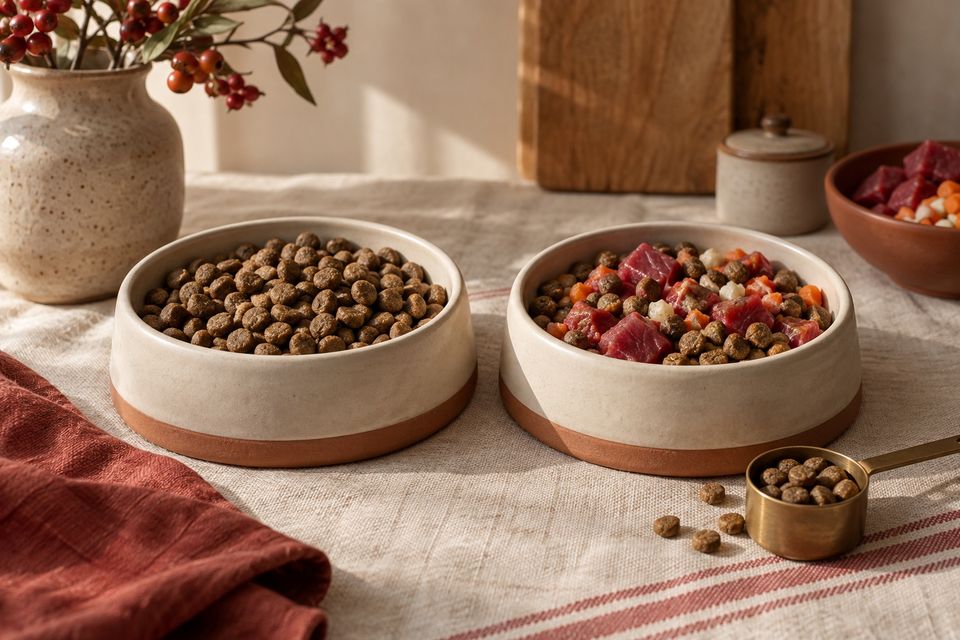
The hardest part of switching food often isn't buying it — it's switching.
You've decided your pet deserves better, the package has arrived — and then what? Pouring a full bowl of the new food on day one is where many transitions fail. It's not the food. It's the pace.
Why you can't just switch
Gut flora establish themselves around the long-term staple diet. A gut accustomed to kibble, suddenly facing a completely different kind of food, needs time to adjust — the flora have to rebalance, and digestive-enzyme production has to catch up.
Switch everything overnight and the usual results are soft stool, diarrhea, occasionally vomiting. Many owners conclude “fresh food doesn't agree with them.” The more accurate conclusion: their gut wasn't ready — not that fresh food was wrong for them.
7–14 days is the window in which most cats and dogs complete this transition.
The plan: go by ratio, not by mood
- Days 1–3: about 25% new food, mixed into the old. They'll probably pick out the new pieces first — a good sign, but not a reason to speed up.
- Days 4–6: half and half.
- Days 7–10: about 75% new food.
- Days 11–14: fully switched.
Between steps, let the stool decide: formed and regular means move up a step; noticeably softer means hold the current step for two more days. No shame in that.
For the young, the old, and the sensitive-stomached, stretch the whole table — add 2–3 days to every step and budget 14 days or more. Slower is always faster than starting over.
The three signals to watch
1. Stool. Slightly softer on days 2–4, slightly different shape — that's normal adjustment. The real stop signals: watery diarrhea lasting more than 24 hours, or any blood. Step back one level; if things don't settle after stepping back, see the vet.
2. Energy and appetite. A transition shouldn't change either. Playing as usual, eager at mealtimes — you're on track. Noticeably lethargic, or refusing food for more than a day — stop and find the cause.
3. Vomiting. One isolated vomit: check eating speed first — eating too fast is more common than eating wrong. Repeated vomiting, or vomiting together with low energy: stop the transition and ask your vet.
To be honest about the limit: if your pet is ill, on medication, or recovering from surgery, don't start a transition yet. When to switch and how to switch should travel together with veterinary and nutrition advice. We make food, not medicine.
Finally
With transitions, pace matters more than determination. Willing to spend two weeks getting your pet across comfortably? That willingness is itself the care.
If you'd like the transition table calculated for your pet's age, weight and condition — two minutes to build their profile. Every recipe and portion is reviewed by a nutritionist: the technology does the calculating; a person makes the call.
Still weighing up safety itself? We took the three real risks apart in the previous piece: Is raw feeding safe? Parasites, bacteria, and the three questions you should ask.
This article shares feeding knowledge and is not medical advice. For health concerns, see your vet.